Showing posts with label Sensory. Show all posts

Friday, June 3, 2016

Colleague Question #1: ASD client swallows pool water. What do I do?


Often times, I will receive questions from colleagues via email or FB private messages regarding specific cases they are dealing with.  I tend to shoot back an email but I have been thinking lately that it might help to share these responses with you too.  Maybe they will help or maybe they will spurn a few additional great ideas from you that you can share with your fellow colleagues.  So here is the first post in this "Colleague Question" series.

A fellow colleague writes:

"I have a client with ASD and SPD...he loves swimming but can't stop swallowing the pool water. He also struggles with swallowing instead of spitting during teeth brushing.  His parents have suspended his swimming lessons even though he so enjoys them because he can become ill from all the water he takes in...Any suggestions?"

Some of you reading this question may be asking yourselves "What does this have to do with speech therapy or communication?", yet, the reality is, as SLPs, we may be the only service provider for some children and therefore, the only source of guidance and education for parents.  It's important for us to fully understand sensory needs in our ASD population and how we can assist parents in providing effectively for those needs.

For this particular case, let me first say that it is important to keep safety at the forefront of decision making for our clients so I can understand why the child's parents would suspend swimming lessons at this time. However, for children who have sensory needs it is almost painful for me to hear a child not being able to participate in such an enjoyed activity.  I'm sure swimming provides some wonderful sensory input as well as a wonderful social opportunity for this child and my hope would be to find a way to get this child back to swimming lessons as soon as possible.  As this is a safety issue, we cannot encourage this behavior even if it provides some sensory feedback for the child.  What I would suggest is possibly finding a way to appropriately replace this behavior with something safer that the child can do in the water while still providing some type of sensory input.

An acceptable compromise would be to try and replace drinking the pool water with blowing bubbles with lip trill (sounding like a "motor boat") or humming with child's lips sealed while in the water (nose and eyes above water).   Either of these options will still provide sensory input to the child's face but will encourage water to be blown away from lips, or in the case of "humming", total lip closure.  These activities can be practiced at home during bath time so that the child can master one or both of these replacement behaviors initially, then transferred to practicing them in the pool during non-lesson times first, following by adding them during swimming lessons.

To aid in decreasing swallowing of saliva during teeth brushing, it might help child to have a visual goal to encourage a replacement behavior.  Possibly parents can teach the child to spit often (every few brush strokes) into a small disposable bathroom cup.  They could make a game out of it by brushing their teeth together with the child, modeling how to brush and spit often.  Parents and child can each have their own cup in which they draw a large line on the outside of cup indicating a stopping point.  Whomever fills up the cup to that line first wins the game.  This encourages spitting often while making this activity, hopefully a bit reinforcing, creating excitement and fun!  Of course it doesn't sound very appealing to be spitting into a cup and having to look at it for us as adults, but the visual may provide the child with a concrete goal so that he can learn how to spit rather than swallow during teeth brushing.  Over time this activity can be modified to see who can spit in the sink a certain number of times, and so on, so that the cup gets faded out and typical teeth brushing remains.

I hope these suggestions help.  Have any suggestions of your own you'd like to add?  Feel free to comment below.

Look for more posts in this new series to come over the next few weeks.  If you have a specific question you'd like answered feel free to email me at communicationstationspeechtx@gmail.com.  You just might see your question pop up in this series.  (Note: all identifiable information will remain confidential.)

Happy talking and swimming this summer!
post signature

Friday, April 19, 2013

FREEBIE Friday: GIVEAWAY and Sensory Tips for Children with SPD!

This month we are talking all about Autism Spectrum Disorders.  Many children on the Autism spectrum will exhibit sensory processing issues also known as sensory processing disorder (SPD).  Today I have a wonderful educational FREEBIE using information from Angie Voss' fabulous, newly updated book, Understanding Your Child’s Sensory Signals: Keep it real.  Keep it sensory.  Keep it simple.

This freebie contains just a few challenging behaviors a child with SPD may exhibit, explanations of why it seems to occur and what we as parents, teachers, therapists can do about it in the moment.


Grab your copy of this freebie here!

Wait there is MORE!  Do you like these tips?  How about getting your own copy of this book with 113 pages of various behaviors and sensory tips for FREE?  Enter the giveaway at the bottom of this blog to win your FREE copy of Angie's AWESOME BOOK!!!!


I LOVE this book SO SO SO MUCH and believe it is such a FANTASTIC resource Angie Voss, OTR is kind enough to GIVEAWAY 2 FREE ebook copies for you!

Let's Talk Speech-Language Pathology and I are working together to share this great opportunity with you.  So make sure you ENTER TO WIN below!!!

Winners will be announced next Friday! Good luck!


a Rafflecopter giveaway


Enjoy and happy talking!

post signature

Wednesday, February 27, 2013

Guest Posting: Let's Get Physical! Keeping PK kiddos attention during therapy.

Today I am guest posting on [simply speech.]'s Welcome Home series today!  The topic?  Using movement to keep PK students attentive during therapy!

Here's a preview of all the goodies you will find over there...

So here is my biggest secret to success with preschoolers:  Movement!  It is NOT developmental to expect a PK age child to sit and attend to an activity for 30 or 50 minute sessions.  Children are constantly learning, exploring, and problem solving.  They, like us all, need proprioceptive feedback.  I provide that by adding movement to almost ALL of my therapy activities.  When I add movement to any activity, I have learned that my PK students attend longer to one single activity and will participate in more trials during the therapy session than if I would expect them to sit the entire time.  The movement does not have to be big or elaborate.

Want to know my simple tricks of the trade for some of our favorite activities as SLPs? Head on over to [simply speech.] TODAY to find out!

Do you use movement activities in your therapy sessions?  Feel free to share your great ideas below!

Happy Talking

Sunday, January 27, 2013

Shaving cream play...a great way to facilitate language!


During the summer, I had a playgroup at my house and it was ALL about sensory fun!  We had shaving cream EVERYWHERE...


...in our sensory table with some cars...


...in an infant wading pool with some foam blocks...
(As you can see we had some pirates and Frankenstein grace us with their presence at this play date!)

...even in some Tupperware with paintbrushes so the kids could paint on my windows (which of course meant they needed water squirters to clean it off and do it again!!!).  


And oh the wonderful language that was used that day to describe what they were doing, what they were making, and how they were doing it!  

So you all know what this means for my clients don't you?  Some lucky parent will be washing some shaving cream off of their child soon enough...once the weather gets nice again and we can spend some quality time outside!

I have a sneaky suspicion that sensory table with saving cream and cars will show up again...maybe with some laminated stimulus cards hidden in it!  Hmmmm....who knows what else this old brain will think of!  I guess you'll just have to wait and find out come spring and summer.  I'll keep you posted. :)

P.S.  This is what my bathroom looked like that night after cleaning the shaving cream off of ALL the foam blocks!  SO WORTH IT!


Happy Talking!!!

Sunday, August 5, 2012

Austim Therapies: A Resource List

Autism has quickly become the most highly diagnosed disorder among children over the past 10 years.  Current incidence rates suggest 1 out of every 88 children is diagnosed with ASD (Autism Spectrum Disorder).  It can be overwhelming to hear as a parent.  You many not know where to turn or what types of treatment programs are out there for your child.  I found a list of various therapies that exist for children diagnosed with ASD on Cafemom.com (courtesty of the group Autism: Support Across the Spectrum) and thought it could be helpful for those new to the diagnosis to be able to read a short description of what types of therapies are offered (in no particular order). 

**NOTE: This is not a comprehensive list nor is this a statement of support or efficacy for the following programs.  This is just a list for the sole purpose of educating parents on the possibilities of therapy programs.  I recommended that you do extensive research prior to participating in any program or therapy listed.**

If you are aware of additional therapies that are not listed feel free to add them in the comments below!

1.) TEACCH is an acronym for Treatment and Education of Autistic and Related Communication Handicapped Children. It is a complete program of services using several methods depending on the individual needs of the child with autism. The goal of TEACCH is to help the autistic child develop as much autonomy as possible by adulthood.

2.) Applied Behavior Analysis or ABA involves the systematic evaluation of the environment to determine factors that cause undesirable behaviors from the child with autism. Positive reinforcement are used to produce behavioral improvements. ABA requires a trainer to work with the child one-on-one for 30-40 hours each week. The Lovaas Model is a type of ABA developed by Ivar Lovaas, PhD.

3.) Vision therapy is useful for individuals with autism who have good eyesight, but have distortions in the ability of the brain to comprehend the visual message. If the sense of vision is unreliable, various undesirable behaviors may occur. Vision therapy helps to make the visual system understandable and to improve behaviors

4.) RDI (Relationship Development Intervention): provides a way for individuals to really understand relationships, and to go beyond scripted behaviors. Parents are able to administer the program so that deeper emotional bonds are established.

5.) Son-Rise Program 
developed by Barry Neil and Samahria Kaufman developed
 for their son, Raun. The program encourages the parent to participate with their child with the repetitive and ritualistic behaviors, to use the child's own motivation, and to teach with interactive play in the home.

6.) The Higashi Method or Daily Life Therapy was developed in Japan, and was imported into the United States. This autism therapy primarily emphasizes the development of self-care skills in order to improve self-esteem. Then, a high amount of attention is given to physical exercise. Communication, social and behavioral skills are also taught in an encouraging environment.

7.) The Developmental, Individual Difference, Relationship-based Approach (DIR)was developed by Dr. Stanly Greenspan and Dr. Serena Wieder.  Floortime is one of the key interventions of DIR. The parent connects with their child through play by allowing the child to lead and by keeping the play interactive. Floortime helps the child master developmental milestones that have been delayed.

8.)  Play therapy helps the individual with autism to express their feelings and to solve problems with the assistance of toys while learning social skills, communication techniques, and appropriate behaviors through this autism therapy.

9.)  Therapeutic horseback riding refers to horseback riding lessons for individuals with special needs, such as autism. Hippotherapy is a form of equine therapy in which the horse is used as a therapeutic tool as its focus is on createing a bond between the child and the horse while it is improving balance, posture, flexibility, muscle strength, and proprioception. Improvements are also noticed in cognition, sensory integration, emotional, social and communication areas.

10.)  Pet therapy is a fun way to teach children to understand body language, consequences, responsibilities, friendship and empathy through their relationships with animals

11.) Speech and Language Therapy focuses on improving all aspects of communication including receptive and expressive language, voice, fluency, articulation, as well as social skills (includes non-verbal communcation) and may be done via the use of AAC devices, Picture Communication Exchange System (PECs), Sign Language, Social stories, social scripts and/or other various techniques

12.) Occupational therapy for autism focuses on improving sensory integration and fine motor skills as well as stimming. You really need to find an occupational therapist who specializes in sensory integration dysfunction and, if applicable, dysgraphia (poor handwriting).  In addtion, use of weighted blankets and weighted lap pads and weighted vests and weighted neck wraps during occupational therapy and at home is especially beneficial for many children with autism.

13.) Brain Gym is a set of simple movements designed to encourage whole brain learning. These exercises re-pattern the brain to allow access to those parts of the brain that were previously inaccessible.

14.) Auditory integration therapy is appropriate for individuals with autism who have good hearing, but have difficulty processing and understanding the sounds. This condition is called central auditory processing disorder.  Dr. Alfred Tomatis originally pioneered this area of therapeutic listening. In addition: The Listening Program. Music therapy is the application of music to encourage development in social, communication, behavioral, cognition, perception, and motor areas. Many autistic individuals already possess an aptitude for music which further enhances their response to music therapy.

15.) The Sound Health Series and the Music for Babies Collection offer further auditory experiences to encourage appropriate brain development and to decrease the effects of toxic noise.

16.) Dance therapy can calm or stimulate, aid communication and socialization, enhance posture and coordination, and improve confidence and self-esteem. You can learn to teach your own child to use everyday movements in their own creative dance.

17.) Art therapy uses the creative process of art and artistic expression to develop communication and social skills, and to reduce stress, anxiety and depression resulting in improved self-esteem and behavior.

18.) The Wilbarger Techniqueis another way to apply deep pressure. A flexible, plastic, and non-scratching surgical scrub brush is used to firmly brush most skin surfaces. The brushing is then followed by joint compressions. Most individuals with autism notice significant improvement in tactile and proprioception sensitivity.

19.)  Temple Grandin, PhD is an adult with autism who developed a device to provide her with the application of deep pressure in order to help with calming. The device in known as Squeeze Machine, Squeeze Box, Hug Machine, or Hug Box.

20.)  The HANDLE treatment acknowledges that the sensory systems often do not provide adequate information. Various behavioral responses are a result of this faulty information from the environment. The environment is then changed as needed while various activities are initiated to properly integrate the senses

21.) The Interactive Metronomeuses neurosensory and neuromotor exercises to help the brain repair and remodel nerve connections which aid in to increasing internal processing speed within the brain. The individual would match the rhythmic beat heard through headphones with various hand and foot exercises.

22.) Delacato Methodwhich was developed by Glenn Doman and Carl Delacatto. This method stimulates the senses in order to improve sensory integration so that the child has a normal response to various sensory experiences. Learning disorders and behavior problems are improved. Parents work with their child in 2-5 minute blocks at home after completing the evaluation and training at a center.  There is controversy surrounding the efficacy of this treatment program.

23.) Craniosacral therapy involves extremely gently manipulations of cranial and sacral bones. This soft touch releases restrictions within the craniosacral system including the cerebrospinal fluid. Chiropractic care provides adjustments to the skeletal system. The central nervous system functions much better with the elimination of these restrictions and with the adjustments to the skeletal system.  Massage therapy releases tension from muscles and restrictions from connective tissue. In the process, toxins are also eliminated from the skin, connective tissue, and muscles. These toxins should be flushed out of the body with an abundance of water. You will need to work with a massage therapist who understands that autistic individuals will vary in their need for deep or light touch.

24.) Hyperbaric oxygen therapy involves the safe use of compressed ambient air in a large comfortable chamber during a 60 minute session. The higher pressure causes more oxygen to be dissolved in bodily fluids. Your cells are able to access this extra oxygen, to perform essential processes more efficiently, and to heal themselves.

25.)  Holding therapy is rather controversial autism therapy. Dr. Martha Welch is a child psychiatrist who taught parents to hold their child while trying to make eye contact and to share feelings. They are to continue to hold the child even if the child was struggling and resisting. Proponents feel that the deep pressure helps with sensory integration dysfunction. Opponents feel that the therapy is traumatic.


Tuesday, July 31, 2012

Sensory Processing Disorder: What you should know!


When parents are new to the diagnosis of ASD (Autism Spectrum Disorders) or other medical diagnosis that have sensory processing deficits as a characteristic, it can be overwhelming to hear so many professional terms and understand what it all means.  As a Speech-Language-Pathologist, I have worked with several children with sensory processing difficulties and wonderful OTs (Occupational Therapists) and COTAs (Certified Occupational Therapy Assistants) that aided in my understanding of the complexities of sensory processing.  I will attempt to impart their knowledge as clear and concisely as I can.

(NOTE:  Often, sensory integration and sensory processing as well as sensory integration dysfunction and sensory processing disorder are used interchangeably.  Therefore, I have used them interchangeably as well.  In addition, I do NOT specialize in sensory integration and am writing this blog for educational purposes only.  I recommend that you speak to an OT that specializes in sensory integration if you have additional questions and concerns.)

What is Sensory Processing?
Simply put, sensory processing is a complex process in which our brains understand what is going on inside our bodies as well as in our external environment through the use of our senses. 
Sensory processing is affected by two things: 
1.       The way our brain responds to sensory input
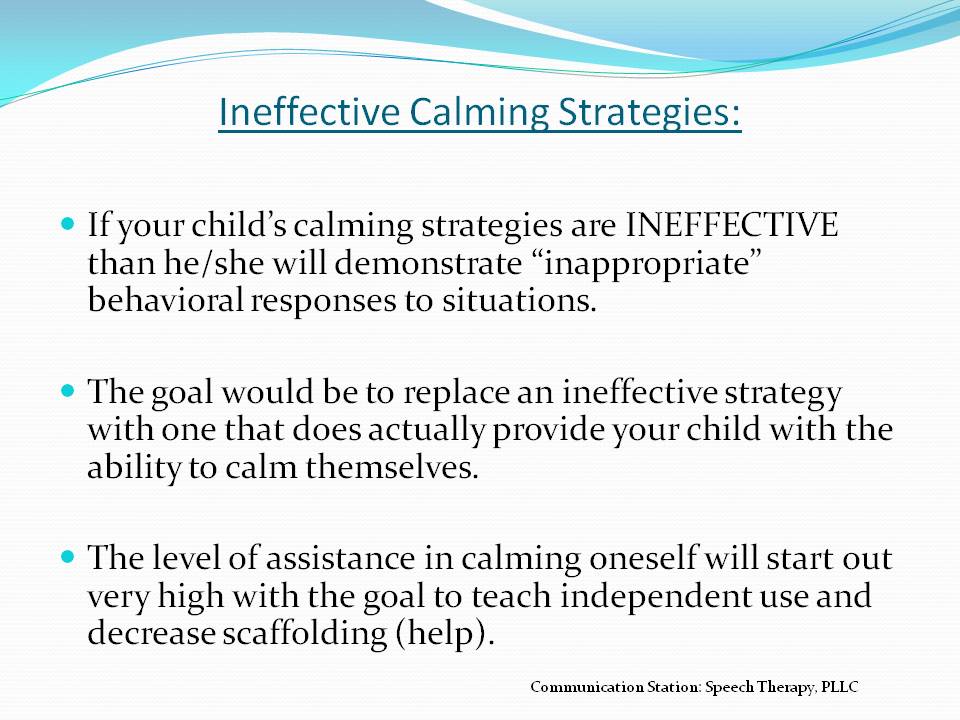
2.      Our self-regulation strategies (how we use strategies to manage this sensory input).
Keep in mind that sensory processing is a continuum and that we all require proprioceptive (physical, external) feedback to regulate our sensory system.  What we are really concerned about is one’s extreme responses to sensory input and the negative affect these responses have on a person’s ability to communication and participate in daily living activities.
The blow powerpoint presentation will further explain sensory processing vs. sensory processing disorder.


How do I know if my child has difficulty processing sensory information?
Below is a link to a checklist also adapted from Carol Stock Kranowitz’s book, Out-of-Sync Child.  This checklist is very detailed and examines several areas of processing including tactile, vestibular, proprioceptive, auditory, oral input, olfactory, visual input, auditory-language processing, and social-emotional play and self-regulation.  You place a checkmark next to the characteristics your child exhibits. 
IF you feel your child exhibits numerous characteristics in one or more areas, please follow up on your concerns by contacting an OT that has experience in sensory integration.  They can perform a complete evaluation and make recommendations.

Check out Sensory Processing Disorder website for a complete checklist on sensory processing disorder.

Is it important for my child to receive OT for sensory processing disorder?
ABSOLUTELY!  Sensory processing disorder CAN and WILL affect all areas of growth for your child (cognitive, academic, executive functions, social skills, communication, etc.).  If you have concerns about your child’s sensory processing skills, it is imperative that you contact an OT with experience in sensory integration dysfunction in order to determine your child’s needs as well as an appropriate plan of treatment.


Happy Talking!!!

Related Posts Plugin for WordPress, Blogger...